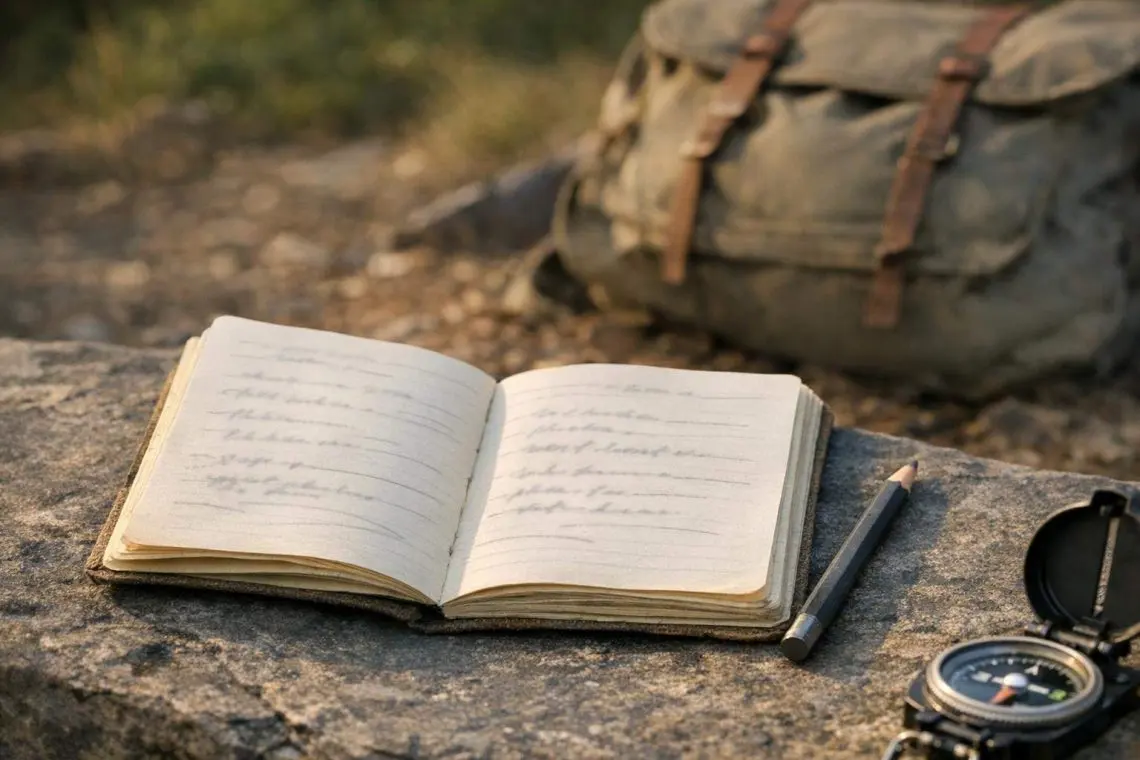
Decisions made and reasons behind them. A good trip log may look quite vague a few weeks after return but all necessary points will be recalled. They will be used to plan and prepare the next trip in more detail than if all was written down as it happened. So write down the trip log as you are still unpacking and the memories are still quite fresh.
Start with the decisions you may need to repeat
While it's possible to keep a diary of every observation, view, snack and mile of your outdoor adventures, such a journal would be quite cumbersome to read back. In reality, most of the important decisions were made prior to the trip, and it's these same decisions which one would like to refer back to on subsequent, similar adventures. Thus, it's better to start with the basic information of each trip, and then add the details of the decisions which influenced one's comfort, safety, time and energy while on the trip.
Determine what for future reference (to improve or to do differently). Describe in detail why a particular route was chosen, where a trip was started and ended (parking, access points), why a route was abandoned, and the factors that influenced a route (e.g. difficult terrain, human influence). When noting to record information about the habitat, in addition to the general observations note any signs of humans, wildlife, and record how access was.
Simple. Would the note be useful for a subsequent trip of similar nature? No, then cut it down to the essential.
Use a format you will actually maintain
A great outdoor trip log is one that can survive a busy week or so after return to home. A small notebook to toss in a pocket or on a hook at home is perfect for a few notes after return. But if you have a smartphone with you on the hike, then a few notes on the phone is even easier to search for later, to copy to elsewhere, and to add photos to.
Whether you're on a short stroll around home or on a long distance trek, the medium of choice will depend on the trip. For short, local trips a few lines on a phone may be sufficient. However for long multi-day trips a simple paper notebook can be a good back-up for items such as route notes, water quantity notes and equipment checks. With digital systems, keep the structure the same for all notes so they can be easily searched. With paper, leave a little space between entries to come back to them after a gear clean.
A practical entry can follow this order:
– Plan: destination, intended route, timing and load.
– Conditions: weather, ground, water availability, insects and visibility.
– What happened: delays, route changes, comfort issues and useful discoveries.
– Next time: keep, change, repair, replace or leave behind.
By including the decision point in your hiking notes you will prevent them from evolving into a collection of random observations.
Record route friction, not just route distance
Make sure to note where on the route you had any problems with your route finding, what caused any hold ups and where you turned round. Also make a note of where your pace dropped off and why. Refer to these notes in your route planning to help improve future versions of the route.
Note down false precision when using estimates but be wary of using your notes for long periods of time as they will be of little use. However, you can add practical reference points to your notes that will still be of use to you later on. Just don't use them for planning your next trip out instead of using up-to-date maps, weather forecasts, access information and local notices.
When jotting down notes for hunting and habitat monitoring do not draw false conclusions after a while, rather describe the conditions as they were. Damp, recently trampled ground, dry spots and difficult terrain to cross are all good points to note but after some time have passed don't rely on them to set up future strategy for hunting. Current conditions may be quite different. Signs of human presence, domestic animals and current land use practices are best written down as simple observations only.
Turn discomfort into useful gear lessons
A useful note for a camping failure can explain in more detail why something didn't work. 'Cold at camp' doesn't tell you much on its own. Was that because of wet clothes? A bad camp site? Inadequate insulation? Wind exposure? Lack of repair to tent? Note the cause(s) of the problem.
It is easy to confuse your failure with your gear and your discomfort with your activity. Clearly differentiating between these will mean you develop good gear notes. The simplest way is to go back to your notes after a long trip and note the occasions when you failed as a hiker or hunter and why you failed. Such a diagnostic exercise is invaluable for helping you to improve your hiking and hunting skills.
Wait a week before trash collection and check all items for:
– worn insulation or materials
– cold points (sleeves, socks etc)
– wet pack notes
– damaged or worn zip pulls
– items not used
– pack methods
List items for repair and note what simply needs re-packing. Note what simply needs re-organising and re-packing (zipped side pockets etc). These simple improvements can prevent a huge expense before you commit to it.
Close the loop before the next departure
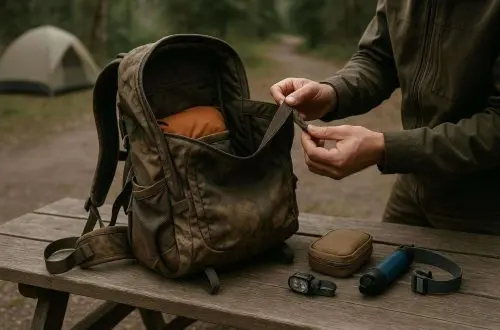
Pull out the time later to do a short review of your equipment to go through your batteries, fuel systems, footwear, packs, map & compass, and clothing. List out any repairs that are needed. Write down what wasn't there, or wasn't accessible when you needed it (e.g. a safety item). Make sure you have the current information for requirements and rules for activity and location that you will be departing from for your next trip.
Also document what worked well for you. The layer you had on when you got cold, the food that packed best, alternative routes to avoid disturbing the environment too much, and the best way to organize your camp to be able to leave early the next morning. All of these details can help in future planning.
Return to your camping and hiking gear after it has dried out from your trip, and review the notes that you recorded along the way. Pull out one or two useful lessons, gear adjustments, and tips for preparing for your next trip and use them at your next planning session for that trip. These scattered notes about your past trips become a very useful reference about your past experiences in the places you enjoy in the outdoors.